World Series update: October 25, 2026. Written after Game 2.
The World Series gives collectors something a checklist cannot: the chance to watch a card’s subject become part of a baseball memory. A name you have followed for years might deliver the defining play. Someone you barely noticed during the regular season might become the player you remember from October.
This year’s Brewers–Rays matchup offers room for both kinds of stories. Whether you collect Milwaukee, Tampa Bay, individual players, or postseason baseball, this is an opportunity to watch closely and give your collecting a little direction.
At Bethany Sports Cards Plus, we have baseball card products available in the shop and through our online listings. Here is an equal look at both teams, with ideas for following the Series without letting one highlight make every buying decision.
Where the Series stands
Milwaukee leads two games to none after a 5–4 Game 2 victory on October 24. Sal Frelick supplied the tying home run, and Cooper Pratt drove in the deciding run. Tampa Bay had built a four-run lead in the opening inning. The Associated Press Game 2 report covers the comeback.
That gives collectors a snapshot, rather than a finished championship story. There are still games to watch and new moments to discover. Keep the date of any article or price comparison in mind as you follow the action.
Milwaukee: three different collecting paths
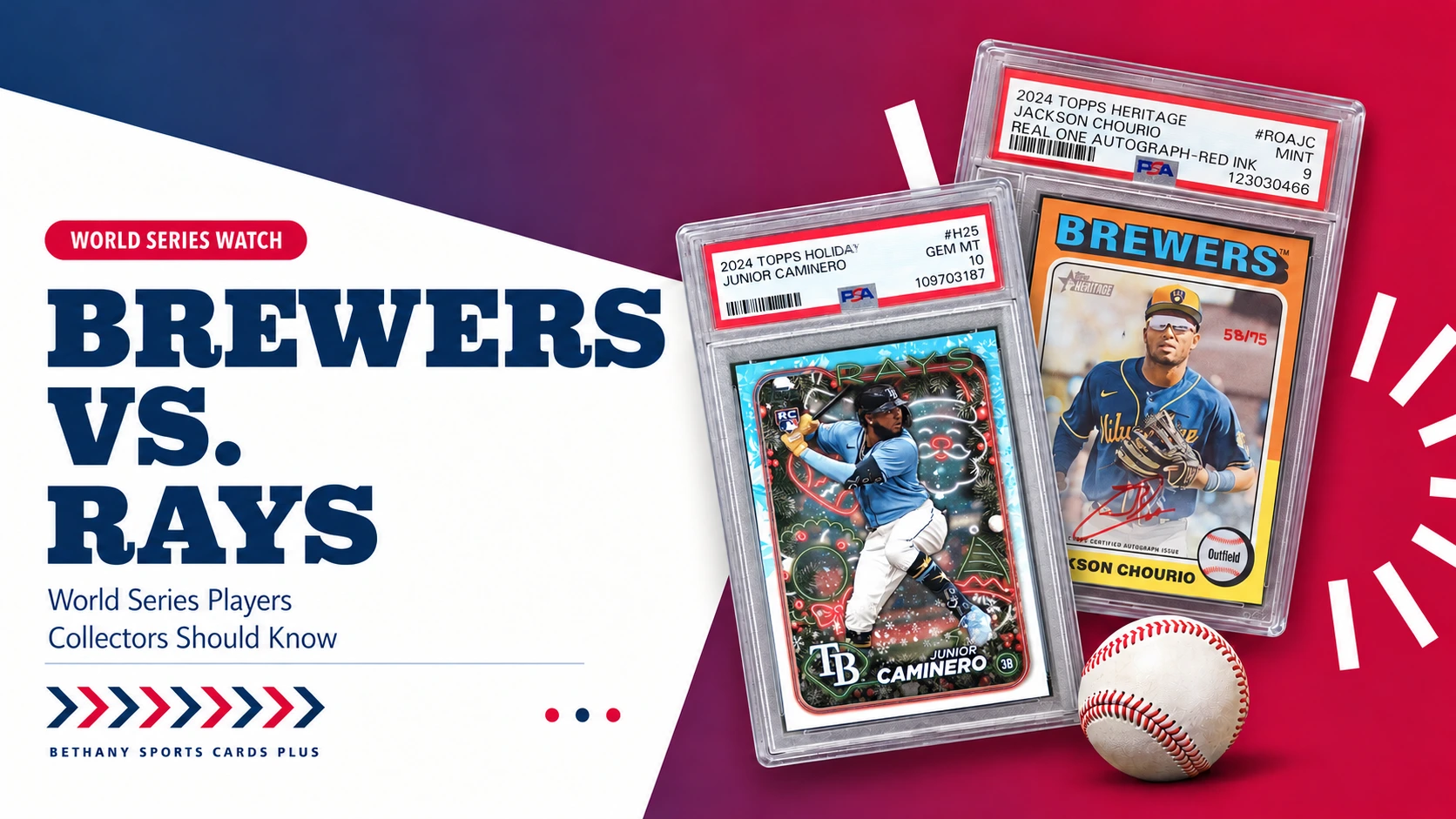
Jackson Chourio: build a player collection with a purpose
Jackson Chourio appears on Milwaukee’s World Series roster, alongside Frelick and Pratt. For a Chourio collector, the Series is a useful reason to review the collection you already have and decide what you would enjoy adding.
He became the first MLB player with three 20-homer, 20-steal seasons before turning 23, as MLB reported in September.
One approach is to organize the player’s cards by career stage: prospect issues, rookie releases, and later cards. Another is to focus on one design or a manageable run of parallels. Either creates a clearer project than buying whatever happens to appear first in a search.
Before adding a card, identify its exact year, set, number, and version. A collection with a clear theme can feel more satisfying than a pile of cards purchased during a few exciting innings.
Sal Frelick: collecting a moment you watched
Frelick’s Game 2 contribution offers a different starting point: a specific memory. Perhaps you watched the home run with family, followed the game from a favorite seat, or immediately thought of a card tucked away in a box.
He had only four regular-season home runs, according to MLB’s account of his tying blast. October can give an unexpected swing a lasting place in a fan’s memory.
If that moment matters to you, consider choosing a card that you enjoy displaying rather than assuming you need the rarest available version. Write down why you chose it. A short note about the game can make a modest card a meaningful part of your collection.
Check product checklists before assuming a card depicts this particular World Series moment. An ordinary player card and an event-specific issue tell different stories.
Cooper Pratt: keep prospect and rookie collecting distinct
Pratt gives collectors an opportunity to examine how early-career cards fit together. When searching, separate prospect releases, rookie cards, autographs, and parallels into their own categories.
The words “first,” “rookie,” and “debut” can refer to different things in listing titles. Read the actual card and the manufacturer’s checklist. You want to understand what you are buying before comparing its price with another issue.
For a postseason collection, a Pratt card could mark your memory of this Series. For a larger player collection, it could fill a particular release or design gap. Decide which goal matters to you.
Tampa Bay: give the other dugout equal attention
Junior Caminero: start with the player you want to follow
MLB’s position-by-position Series breakdown highlights Junior Caminero, Chandler Simpson, and Drew Rasmussen among Tampa Bay’s players. Those names provide three starting points for Rays collectors.
Caminero’s MLB statistics show 42 home runs and 101 RBIs in the 2026 regular season. That gives fans a full-season achievement to consider alongside the latest postseason moment.
For Caminero, consider a player-focused project built around cards you actually like. Perhaps you want a clean base rookie, a favorite photograph, or one autograph you can comfortably afford. The project does not need to become a hunt for every version ever produced.
Watch the games, learn what makes you enjoy following the player, and let that guide your selections. That connection can make the collection worth revisiting after the final out.
Chandler Simpson: make room for your own favorites
Simpson is a useful reminder to look beyond whichever player dominates the day’s hobby conversation. Your favorite part of baseball might be an at-bat, a defensive sequence, or the way a player changes the feel of an inning.
He hit .306 and led the American League with 46 regular-season steals, according to MLB’s baserunning preview.
Choose a Rays card that connects with what you enjoy watching. It might become the anchor of a small team collection, or simply sit alongside a ticket, photograph, or handwritten game note.
You can also build a balanced Series display: one player from each team, matching card designs, and a note explaining the matchup. That creates a keepsake without requiring a major purchase.
Drew Rasmussen: include pitching in the story
A World Series collection can tell more of the game’s story when it includes pitchers. For Rasmussen, start by deciding whether you are collecting the individual player, his place on the Rays, or this postseason appearance.
Then compare the cards through that lens. A card showing the uniform you want may be more meaningful to your project than an earlier issue. A rookie card may matter more if you are tracing a career. Neither choice requires treating the collection as a prediction about future prices.
Watch the pitching sequences as carefully as the swings. They can give you a reason to collect that the box score alone misses.
Turn the matchup into a manageable collecting project
Set a scope before shopping. You could choose three cards from each team, one player per position group, or a pair of cards commemorating your favorite game. Set a budget for the complete project rather than deciding separately on every tempting listing.
For product research, the 2026 Topps Series 1 collector guide explains that release’s mix of base cards, parallels, inserts, autographs, and relics. Use the relevant checklist to verify any particular player’s inclusion; one release will not necessarily contain every card you want.
Compare exact versions and completed sales before buying. A postseason highlight is a reason to become interested, but it is not evidence that every card of that player has increased in value.
Bring the baseball conversation to Bethany
Browse our featured listings and eBay store for current availability, or visit Bethany Sports Cards Plus to explore baseball cards in person. Have a particular player, set, or price range in mind? Tell us what you are collecting.
If a card already in your collection has you thinking about submission, our PSA and SGC grading page is a place to begin that conversation.
Whichever dugout you are cheering for, leave room to enjoy the games. The next card you treasure might be the one that reminds you exactly where you were when a play happened.